
A higher-than-expected consumer price inflation (CPI) print for March in the US has dashed hopes of an interest rate cut by the US Federal Reserve (US Fed) in June. Analysts now expect the US central bank to start cutting rates in September, provided inflation remains in check and oil prices remain supportive. The markets, analysts believe, partially factored in this possibility.

Retail inflation declined to an 18-month low of 4.7 per cent in April mainly due to falling prices of vegetables, oils and fats, and came closer to Reserve Bank's target of 4 per cent, showed government data released Friday. It was for the second month in a row that Consumer Price Index (CPI) based inflation remained within the RBI's comfort zone of below 6 per cent. The government has tasked the central bank to ensure retail inflation remains at 4 per cent with a margin of 2 per cent on either side.

On November 12, 2021, the Reserve Bank of India (RBI) decided to ring in uniformity in asset classification and income recognition across all lending institutions. Shadow banks, or non-banking financial companies (NBFCs), like commercial banks, are to test non-performing assets (NPAs) on a daily basis and upgrade them to "standard assets" only when interest and principal arrears are settled by borrowers. This is going to create all manner of headaches for shadow banks and their clientele. Says Y S Chakravarti, managing director and chief executive officer (CEO), Shriram City Union Finance: "NPA levels will go up, especially of small borrowers.

The Sensex and Nifty spiralled lower for the fourth session on the trot on Wednesday as investors remained on edge ahead of US inflation data, which will give clues on the Federal Reserve's policy tightening trajectory. Unabated selling by foreign institutional investors and a jump in crude prices also weighed on sentiment, traders said. Despite a firm start, the 30-share BSE Sensex failed to carry forward the momentum and ended at 54,088.39, lower by 276.46 points or 0.51 per cent. During the day, it tumbled 845.55 points to 53,519.30.


Petitioner and advocate Ashwini Kumar Upadhyay submitted that a large amount of currency has reached either an individual's locker or has "been hoarded by separatists, terrorists, Maoists, drug smugglers, mining mafias and corrupt people".

Reliance Industries was the top loser in the Sensex pack, shedding over 2 per cent, followed by SBI, UltraTech Cement, IndusInd Bank, NTPC and Sun Pharma. On the other hand, Maruti, M&M, Tech Mahindra, Bajaj Finance, Infosys and Bajaj Finserv were among the gainers.

Finance Minister Nirmala Sitharaman on Friday assured cash-starved Yes Bank depositors that their money is safe and the RBI is working on an early resolution of the issue. "I'm in continuous interaction with the Reserve Bank of India (RBI). The central bank is fully seized of the matter and has assured they will give a quick resolution. I want to assure every depositor that their money shall be safe. Their monies are safe," Sitharaman told reporters in New Delhi.

Among the Sensex firms, State Bank of India, Infosys, Titan, Tech Mahindra, IndusInd Bank, NTPC, ICICI Bank, Power Grid, Reliance Industries and Kotak Mahindra Bank were the major laggards. On the other hand, Tata Motors, Nestle, Hindustan Unilever, Tata Steel, Bajaj Finance and UltraTech Cement were among the gainers.

The pace of growth in bank deposits and credit showed a substantial decline in the last quarter of 2009-10, as compared to the same quarter of the previous year.

From the Sensex basket, Tata Motors, State Bank of India, Tata Steel, Power Grid, NTPC, Bajaj Finserv, Bajaj Finance and Asian Paints were the major laggards.

India's services sector activity moderated further in January as new business rose at a noticeably slower rate amid the escalation of the pandemic, reintroduction of restrictions and inflationary pressures, a monthly survey said on Thursday. The seasonally adjusted India Services Business Activity Index fell to 51.5 in January, down from 55.5 in December, pointing to the slowest rate of expansion in the current six-month sequence of growth. For the sixth straight month, the services sector witnessed an expansion in output.

NTPC was the biggest loser in the Sensex pack, tumbling 2.25 per cent, followed by Tata Motors, Bharti Airtel, PowerGrid, HDFC, Reliance Industries, Hero MotoCorp and M&M that shed up to 1.85 per cent.

Equity benchmark indices Sensex and Nifty ended almost flat in highly volatile trade on Thursday amid the lack of any immediate trigger. The 30-share BSE Sensex dipped 5.43 points or 0.01 per cent to settle at 66,017.81. During the day, it hit a high of 66,235.24 and a low of 65,980.50.

"This is the matter of executive policy decision," the bench said while dismissing the appeal.

ITC was the biggest loser from the Sensex pack, sliding 2.04 per cent, followed by Power Grid, Reliance Industries, Larsen & Toubro, Nestle, Kotak Mahindra Bank, Bajaj Finance and JSW Steel. On the other hand, Titan, State Bank of India, Bajaj Finserv, Axis Bank, Tata Steel, Sun Pharma, Tech Mahindra and Bharti Airtel were the gainers.

Prominent exits by promoters included a Rs 15,300 crore share sale in Indus Tower by Vodafone Plc, a Rs 9,300 crore share sale by the Tata group in Tata Consultancy Services.

ICICI Bank was the top gainer in the Sensex pack, rising over 3 per cent, followed by ITC, SBI, HCL Tech, Axis Bank, Bajaj Finserv and Tech Mahindra. NSE Nifty advanced 32 points to 15,856.05.
From the Sensex pack, Nestle, Tata Consultancy Services, IndusInd Bank, Asian Paints, Bharti Airtel, Tech Mahindra, UltraTech Cement, Kotak Mahindra Bank and Hindustan Unilever were among the major laggards. Tata Steel, JSW Steel, HCL Technologies, Axis Bank, Power Grid and Mahindra & Mahindra were among the gainers.

Sun Pharma was the top loser in the Sensex pack, shedding 2.37 per cent, followed by HCL Tech, Reliance Industries, IndusInd Bank and L&T.
The Reserve Bank of India (RBI) on Tuesday told the Delhi high court that withdrawal of Rs 2000 notes is not demonetisation but a statutory exercise, and the decision to enable their exchange was taken for operational convenience.
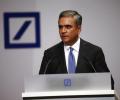
Jain was the architect of Deutsche's investment banking business and placed one of his former trading heads, Alan Cloete, in Hong Kong as co-CEO for Asia Pacific in 2012.
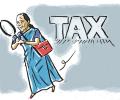
Income-tax payers fear they will receive notices from the government because the annual information statement (AIS) provided by the I-T department in many cases is showing incomes in excess of their earnings. The Central Board of Direct Taxes (CBDT) has dismissed these fears as unfounded. The deadline for filing income-tax returns (ITRs) for the assessment year 2022-23 ended on July 31.

Money managers have turned cautious about the technology space.
M&M was the top laggard in the Sensex pack, cracking over 4 per cent, followed by Axis Bank, IndusInd Bank, Hero MotoCorp, Sun Pharma and ICICI Bank. On the other hand, Bharti Airtel, Asian Paints, Tata Steel, NTPC, HUL and Reliance ended with gains.

Unacademy is conducting another round of job cuts and laying off 350 employees or 10 per cent of its workforce of 3,500, as the SoftBank-backed edtech firm targets profitability and reduces costs, according to an internal note sent by Gaurav Munjal, co-founder and CEO of Unacademy group, to the staff. Munjal said the restructuring exercise would affect about 10 per cent of employees across the group. "I am deeply saddened to share that we will have to say goodbye to some of our extremely talented Unacademy employees," said Munjal in the letter addressed to employees and reviewed by Business Standard.

'The film-literate public in Kerala are not happy watching run-of-the-mill movies.'

It has mostly been a one-way street for smallcap stocks that have taken it on their chin thus far in February. The Nifty Smallcap 250 index has shed 3.2 per cent in the current month as compared to the 1.8 per cent decline in the Nifty Midcap 100 and the 0.5 per cent drop in the Nifty 50 index, data showed. Technically, the index has slipped below its 20-day moving average (DMA) placed at 14,800 levels on Monday, and is currently testing the 50-DMA, and is placed at 14,278 levels.

The Sensex finished above the psychologically key 60,000-mark while the Nifty surged past the 18,000-level on Monday on across-the-board buying amid a mixed trend overseas. A depreciating rupee and concerns over the US Federal Reserve hiking rates later this week failed to quell investors' appetite for stocks, traders said. The 30-share BSE Sensex rallied 786.74 points or 1.31 per cent to settle at 60,746.59.

The Delhi high court on Monday dismissed a public interest litigation (PIL) challenging the RBI's decision to withdraw Rs 2,000 denomination banknotes from circulation. A bench of Chief Justice Satish Chandra Sharma and Justice Subramonium Prasad, which had reserved its order on the PIL on May 30, rejected the plea. Petitioner Rajneesh Bhaskar Gupta has contended that the Reserve Bank of India (RBI) has no power to withdraw Rs 2,000 currency notes from circulation and only the Centre could have taken a decision in this regard.

Unabated selling in banking, realty and technology stocks saw the index slide to a low of 13,543. The Sensex finally ended with a loss of 425 points at 13,570. The market breadth was fairly negative - out of 2,652 stocks traded, 1,823 declined, 760 advanced and the remaning were unchanged on Tuesday.

'He's at best a holding-CEO. Not one who will re-imagine the bank,' a senior banker and former colleague tells Raghu Mohan about HDFC Bank CEO & MD Sashidhar Jagdishan.
Tech Mahindra was the biggest loser in the Sensex pack, slipping 4.59 per cent, followed by Asian Paints, Wipro, Kotak Mahindra Bank, Bajaj Finserv, Infosys, ITC, Mahindra & Mahindra, Hindustan Unilever, IndusInd Bank, Reliance Industries and JSW Steel. In contrast, Larsen & Toubro, Bharti Airtel, Power Grid and Axis Bank were among the gainers.

'When I called the HR department, they abused me.'

Rajan, who has been warning against competitive monetary policy easing by central banks, however, said the situation is different in India where RBI still needs to bring down lending rates to spur investments.
The Indian player has dropped two places to be ranked 33rd on the WTA charts.
Benchmark indices Sensex and Nifty retreated from over one-week highs to close lower on Wednesday due to profit booking in banking, IT and metal stocks amid weak global trends. After a two-day rally, the 30-share BSE Sensex dropped by 90.99 points or 0.16 per cent to settle at 57,806.49 in volatile trade. As many as 19 of its constituents declined while 11 advanced. The broader Nifty slipped by 19.65 points or 0.11 per cent to close at 17,213.60 with 31 of its stocks ending in the red.

The rupee weakened by 14 paise to close at a new lifetime low of 79.59 against the US dollar on Tuesday as a strong greenback overseas and persistent foreign fund outflows continued to weigh on investor sentiment. This comes a day after the RBI announced measures for international trade settlement in rupees. At the interbank forex market, the local unit opened weak at 79.55 against the greenback and witnessed an intra-day high of 79.53 and a low of 79.66.

'It is advisable to stay away from the markets for now and buy only on a dip.'
M&M was the top loser in the Sensex pack, skidding 3.31 per cent, followed by Reliance Industries, Bajaj Finserv, ICICI Bank, Maruti, Tata Motors and Tech Mahindra. On the other hand, Tata Steel, L&T, Axis Bank, Bharti Airtel and HDFC Bank were among the gainers.
